Researching Colleges: Building Your List
Once your student has built a strong foundation, the next stage is Research: deciding where to apply. This is where a family turns a vague sense of “somewhere good” into a specific, balanced, affordable list of colleges. Done well, it shapes everything that follows — because you can only apply to, and afford, the schools that made the list.
Here is what the Research stage involves and where to start.
What is the Research stage?
Research is the bridge between planning and applying. It is where your student figures out what they actually want from a college — size, setting, distance, cost, and academic strengths — and then finds the schools that fit. The goal is not a list of famous names; it is a list of realistic, affordable options your student would be happy to attend.
Build a balanced college list
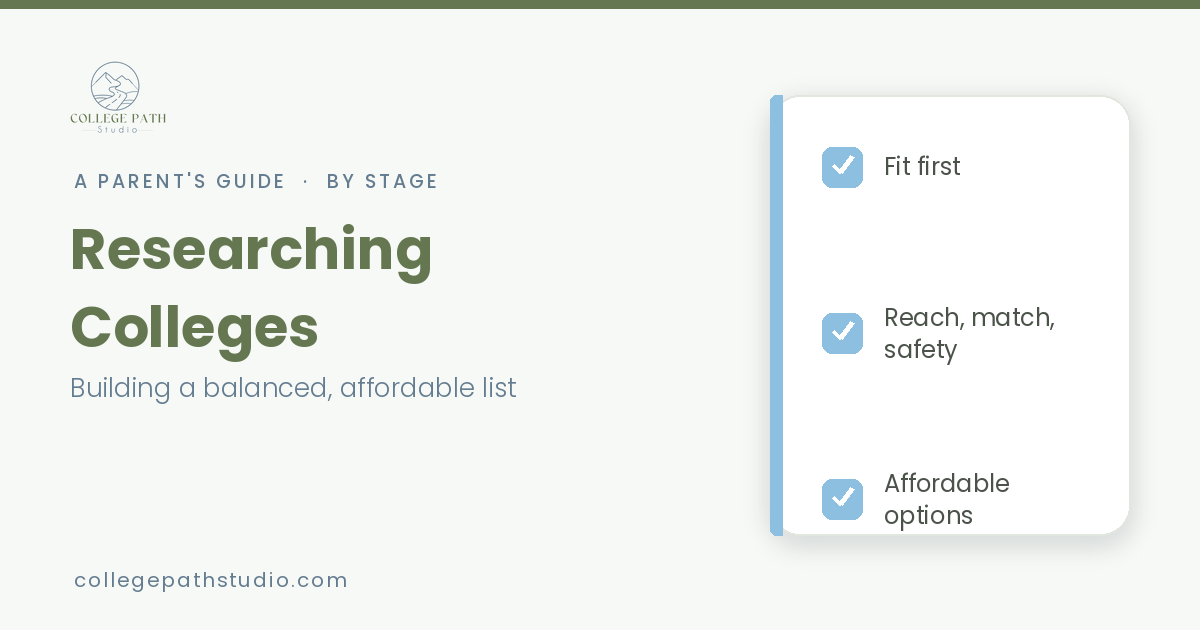
The core task of this stage is the college list itself: roughly eight to twelve schools across reach, match, and safety, where every option clears both the admissions bar and the affordability bar. Our complete guide shows how to build a balanced college list step by step.
Weigh fit and affordability together
Two colleges can look identical on paper and cost your family tens of thousands of dollars apart after aid. That is why financial research belongs in this stage, not later: run each college’s net price calculator as you build the list, and understand how your Student Aid Index shapes what you will pay. A school your student loves but cannot afford is not a match.
Your next step
Start building. Work through the guide to building a college list, keep affordability in view from the start, and use the college planning tools to organize your candidates. The best list is the one where every school is a place your student would thrive and your family can pay for.